Your truck rarely breaks down without warning. In most cases, it sends small signals for days or weeks before a real problem forces you off the road. Learning to catch these early clues can save you from a stranded roadside call, a costly breakdown, or a repair bill that grows the longer you wait. Here are the warning signs every truck owner should know how to spot.
Unusual Noises Coming From the Engine
A healthy engine runs with a fairly consistent rhythm, so any new knocking, ticking, or grinding sound deserves attention right away. These noises often point to worn belts, low oil pressure, or valve train issues that get worse under continued load. Ignoring engine noise is one of the most common ways a small issue turns into a major repair.
- Knocking or pinging sounds that increase with acceleration
- A high-pitched squeal that fades as the engine warms up
- Rattling near the front of the engine, often tied to a loose belt or pulley
- Clicking that changes pace with engine speed, which can signal low oil
Dashboard Warning Lights Staying On
Modern trucks are equipped with sensors designed to flag problems long before you notice them yourself. When a warning light stays lit rather than blinking briefly, it usually means the onboard computer has detected something that needs a closer look. Many drivers assume these lights are minor glitches, but they are often the earliest and clearest signal available.
Waiting too long to address a warning light can allow a small sensor issue to spread into a bigger mechanical failure. A quick diagnostic scan can identify the exact cause within minutes, which saves both time and guesswork. Treat any persistent light, whether it is check engine, ABS, or battery, as a reason to schedule service soon rather than later.
- Check engine light staying solid instead of flashing
- ABS or traction control light activating on dry, normal roads
- Battery or charging system warning appearing during startup
- Tire pressure light triggering even after inflation
Braking Performance That Feels Different
Brakes are one of the few systems where gradual wear can be dangerously easy to overlook, since drivers naturally adjust their habits without realizing it. You might start pressing the pedal a little harder or leaving extra space ahead without consciously registering that anything has changed, which is exactly why brake problems tend to sneak up on people. A soft or spongy pedal, longer stopping distances, grinding or squealing noises, and pulling to one side while braking are all signs that the system needs inspection. A pedal that sinks toward the floor often points to air in the brake lines or a fluid leak, while grinding usually means the pads have worn down enough that metal is contacting metal. Pulling to one side can indicate uneven pad wear, a sticking caliper, or even an issue with the brake hose restricting fluid flow on just one wheel.
It’s also worth paying attention to vibration or pulsing through the pedal, which often signals warped rotors, and any burning smell after repeated stops, which can mean the brakes are overheating. Dashboard warning lights shouldn’t be ignored either, since modern vehicles often flag brake issues before they become noticeable while driving. Because braking issues affect safety directly, these symptoms should never be left unaddressed for more than a few days. Even a minor change in how the brakes feel is worth having checked, since what starts as a small adjustment in your driving habits can quickly become a much larger repair—or a much more dangerous situation on the road.
- Squealing or grinding noise when the brake pedal is pressed — often a sign worn brake pads have reached their wear indicators
- Vibration or pulsing felt through the pedal during stops, usually pointing to warped rotors
- Truck pulling left or right under braking, which can mean uneven pad wear or a sticking caliper
- Brake pedal feeling spongy or sinking closer to the floor, a possible symptom of air in the brake lines or a fluid leak
- Longer stopping distances than usual, especially noticeable when hauling a load or towing
- A burning smell after repeated stops, which may indicate overheating brakes or a dragging caliper
- Dashboard brake warning light staying on, signaling low fluid or a sensor detecting worn components
Fluid Leaks Under the Vehicle
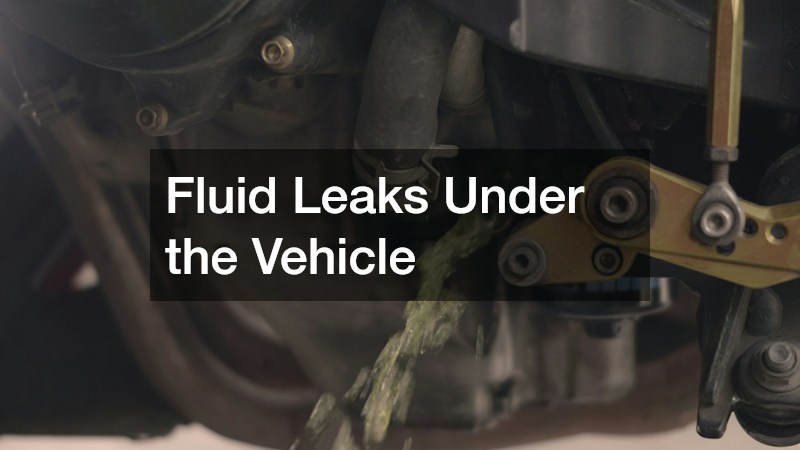
A puddle under your truck is rarely something to shrug off, even if it seems small. Different fluids point to different systems, and identifying the color and location can help you understand the urgency before a mechanic even looks at it. Dark, thick oil suggests engine trouble, while a sweet-smelling, bright green or orange puddle usually means coolant is escaping.
Left unchecked, leaks tend to worsen quickly, especially once a seal or gasket has started to fail. A truck that is regularly low on fluid between top-offs is telling you something is wrong beneath the surface. Bringing the vehicle to a qualified truck repair shop as soon as a leak appears allows a technician to pinpoint the source before it causes overheating, transmission damage, or brake failure.
- Dark brown or black oil spots, often near the front of the engine
- Bright green, orange, or pink coolant puddles
- Reddish fluid, which usually points to a transmission or power steering leak
- Clear fluid, which is typically just harmless air conditioner condensation
Rough Shifting or Delayed Acceleration
A transmission in good condition shifts smoothly and responds predictably to throttle input. When shifts become jerky, delayed, or accompanied by a clunking sound, it often means fluid levels are low or internal components are beginning to wear. Because transmission repairs tend to be expensive, catching these symptoms early can make a meaningful difference in the final repair cost.
- Hesitation before the truck accelerates from a stop
- Grinding or clunking during gear changes
- Slipping sensation, as if the engine revs without matching speed
- Burning smell coming from under the hood after driving
Vibrations or Pulling While Driving
A truck that vibrates at highway speed or drifts to one side without steering input is usually dealing with alignment, suspension, or tire issues. These problems often start subtly, showing up only at certain speeds before becoming noticeable during everyday driving. Left alone, they accelerate uneven tire wear and put extra strain on suspension components.
Regular tire rotations and alignment checks can catch many of these issues before they become noticeable at all. If a vibration appears suddenly rather than gradually, it can also indicate a damaged tire or bent wheel that needs prompt attention. Addressing this early not only improves comfort but also protects the long-term health of the steering and suspension system.
- Steering wheel vibration that increases with speed
- Truck drifting to one side on a flat, straight road
- Uneven tire wear visible across the tread
- Shaking felt through the seat or floorboard during braking
Conclusion
Most major truck problems start out as small, manageable warning signs. Paying attention to unusual noises, dashboard alerts, fluid spots, and changes in how your truck handles can help you catch issues while they are still simple and affordable to fix. The sooner these signals are investigated, the less likely you are to face a breakdown at the worst possible time. If you notice any of the signs above, it is worth scheduling an inspection soon rather than waiting for the problem to announce itself more loudly.