Getting into a vehicle crash brings an overwhelming rush of adrenaline and confusion. Once the dust settles and everyone is safe, drivers face a daunting mountain of decisions. There is property damage to assess, insurance companies to contact, and transportation logistics to figure out. Most people only experience a major collision once or twice in their lives. Because of this, knowing exactly what steps to take can feel like learning a foreign language overnight. The days and weeks following an incident require patience, organization, and a clear plan of action. Vehicle owners must juggle medical evaluations, financial concerns, and property restoration all at the same time, often while managing their regular work and family responsibilities. This comprehensive guide walks through the entire recovery process from the moment vehicles come to a stop. Understanding the correct sequence of events protects drivers from unfair insurance payouts and dangerous driving conditions later on. Finding the right experts ensures that families can get back on the road safely and without unnecessary financial burdens. The recovery journey might be stressful, but taking it one step at a time makes the process entirely manageable. Knowing what to expect reduces anxiety and helps everyone involved make smart, logical choices instead of reacting out of fear. Setting a solid foundation right after the event sets the tone for a smooth and successful resolution.
Securing the Scene and Protecting Your Rights

The immediate aftermath of an impact requires swift but calm action. Safety is always the top priority. If the vehicles can still move and are blocking traffic, pulling them to the shoulder reduces the risk of secondary crashes. Drivers should turn on hazard lights and set up reflective triangles if they have them. Checking on all passengers and the occupants of the other vehicle comes next. Even if injuries seem minor, calling emergency services brings police and medical professionals to the scene to document the event accurately. Documentation serves as the foundation for the entire recovery process. Taking clear photographs of vehicle positions, skid marks, road conditions, and visible damage provides undeniable proof of what occurred. Drivers should exchange insurance information, names, and phone numbers, but they must avoid discussing fault. Admitting blame at the scene can severely complicate matters later when insurance adjusters get involved. Sometimes the fault is highly contested or the resulting injuries are significant. In these specific situations, seeking outside counsel becomes a priority. Consulting a qualified lawyer before giving recorded statements to an opposing insurance adjuster helps protect victims from signing away their rights prematurely. A legal professional understands how adjusters attempt to minimize payouts and can handle communications directly. Gathering witness contact information also plays a huge role. Independent witnesses offer unbiased perspectives that break ties when stories conflict. Solid preparation early on prevents major headaches later.
Decoding the Insurance Claims Process
Initiating an insurance claim often feels like stepping into a complicated maze. Reporting the crash to the insurance provider quickly is essential, but drivers must be careful with their wording. Sticking strictly to the facts prevents misunderstandings. The claims adjuster will investigate the circumstances, review police reports, and examine the submitted photographs to determine liability and coverage limits. Insurance companies have preferred vendor networks and might strongly suggest using specific facilities for the upcoming work. However, policyholders generally retain the right to choose their own service providers. This is a very important detail because independent shops often advocate more aggressively for comprehensive fixes rather than settling for the cheapest available parts. Consumers should never feel pressured into accepting a facility they have not researched themselves. When medical bills pile up alongside property damage, the financial strain becomes immense. Unfair settlement offers happen frequently during this vulnerable time. Having an experienced local car accident attorney step in can make a massive difference. They negotiate with the insurance companies to ensure the settlement actually covers all current and future expenses related to the event. This allows the driver to focus entirely on physical and emotional recovery. Keeping meticulous records of every conversation, receipt, and medical visit creates a solid paper trail. This documentation proves highly useful whether the claim settles quickly or requires prolonged negotiation. Knowing your rights keeps the process fair and balanced.
Addressing Hidden Structural Damage
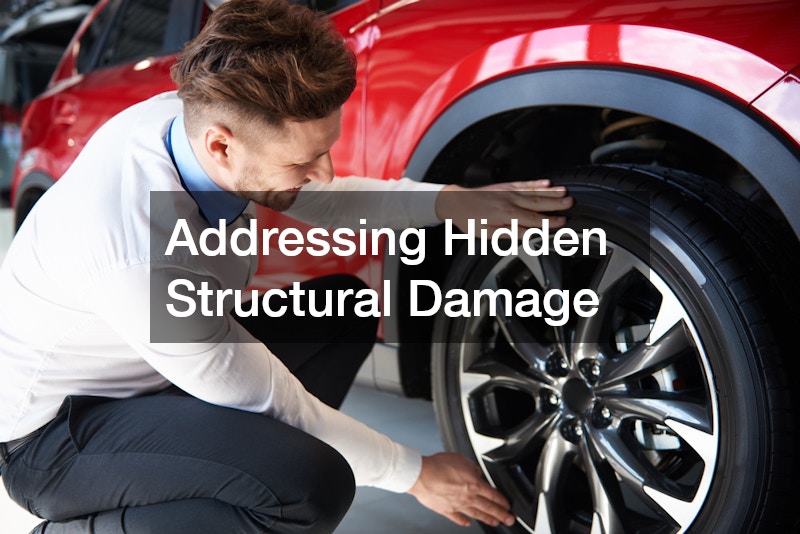
Modern vehicles are engineering marvels designed to absorb impact energy. They accomplish this through crumple zones that fold and bend to protect the passenger cabin. While this saves lives, it means even a low-speed bump can cause extensive underlying issues. What looks like a minor bumper scrape often hides bent frames, damaged core supports, or crushed impact bars that sit just out of sight. Thorough visual inspections simply are not enough to evaluate the safety of a crashed car. Taking the vehicle to a reputable local auto body shop ensures a proper teardown. Technicians will remove the damaged outer panels to expose the inner workings of the chassis. They use computerized measuring systems that compare the current frame dimensions to the original factory specifications. Even a deviation of a few millimeters can throw off the entire geometry of the car, leading to poor handling and uneven tire wear. Proper collision repair goes far beyond making the vehicle look shiny and new again. It restores the structural integrity so the car can perform as designed if another crash ever occurs. Specialized technicians weld, pull, and replace high-strength steel components according to strict manufacturer guidelines. Skipping these hidden structural fixes is incredibly dangerous. A weakened frame will not absorb a second impact correctly, putting everyone inside at severe risk. Safety must always come before surface-level aesthetics.
Mechanical Inspections and Drivetrain Integrity
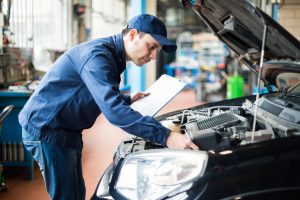
While crushed fenders and shattered lights are obvious, the mechanical shock of a crash ripples through the entire vehicle. The engine, transmission, and cooling systems take a massive jolt during a sudden stop. Radiators can suffer hairline cracks that slowly leak coolant, leading to catastrophic engine overheating days later. Engine mounts, which hold the motor securely in place, frequently tear or break under severe stress, causing the entire engine block to shift. Having skilled auto mechanics inspect the drivetrain is an absolute necessity. They check for fluid leaks, frayed belts, and damaged wiring harnesses that might have been pinched during the crush. The exhaust system also requires a close look, as bent pipes can force dangerous carbon monoxide back into the passenger cabin. Mechanics have the trained eyes needed to spot these specific hazards before the car is driven again. Comprehensive auto repair after an incident ensures the vehicle runs reliably for years to come. Diagnostic computers plug into the car to read fault codes from the engine control unit. These codes reveal issues with sensors, airbags, and anti lock systems that might not trigger a dashboard light immediately. Replacing damaged mechanical parts with high-quality components keeps the engine running smoothly. Without a rigorous mechanical audit, drivers might find themselves stranded weeks later. A properly functioning engine block is essential for long-term reliability.
Restoring Stopping Power and Steering Precision
The suspension and stopping systems dictate how a car handles on the road. During a crash, tires often slam against curbs or other vehicles, transferring immense force straight into the suspension arms, struts, and steering rack. This force bends metal components that are supposed to be perfectly straight. Driving a car with bent suspension parts causes unpredictable handling, rapid tire wear, and severe pulling to one side, making the car exhausting to drive. Addressing these geometric issues requires precise alignments. Specialized machines measure the exact angles of the wheels to ensure they sit perfectly parallel to each other and perpendicular to the road. This service is mandatory after any significant impact to the front or rear wheels. It restores the factory steering feel and ensures the vehicle travels straight without constant steering wheel corrections. Equally critical is the ability to stop safely. The sheer force of an emergency stop can warp rotors or damage fluid lines. Thorough brake repair might be necessary if the pedal feels spongy or the vehicle shudders when slowing down. Technicians inspect the pads, calipers, and hydraulic lines for any signs of stress or failure. Proper stopping power is the primary defense against future crashes. Combining a perfectly straight steering system with responsive stopping mechanics guarantees that the driver retains full control over the vehicle. Handling and braking work together to keep everyone protected.
Ensuring Clear Vision and Glass Safety
Visibility is arguably the most important aspect of driving safely. The glass on a vehicle does much more than keep the wind and rain out. Modern automotive glass acts as a structural component of the roof. In the event of a rollover, the glass helps prevent the roof from collapsing inward and crushing the occupants. It also provides the backboard for the passenger side airbag to deploy correctly. Impacts often send debris flying, or the sudden twisting of the vehicle frame can cause stress fractures in the glass. What starts as a tiny chip or a nearly invisible hairline crack will rapidly spread across the entire surface due to temperature changes and road vibrations. Prompt windshield repair addresses these minor chips before they expand. Specialized resins are injected into the damaged area, curing under ultraviolet light to restore the strength and clarity of the glass without needing a full replacement. If the damage is too extensive, a complete replacement becomes necessary. Technicians must use the correct adhesives and allow proper curing time so the new glass bonds securely to the frame. Many modern cars also feature advanced driver assistance systems with cameras mounted directly behind the glass. These cameras control lane departure warnings and automatic emergency braking. Whenever the front glass is replaced or manipulated, these cameras must be carefully recalibrated. Maintaining clear sightlines ensures drivers can react instantly to road hazards.
The Final Touches for a Clean Slate

Once the structural pulling, mechanical fixes, and glass installations are complete, the vehicle is technically safe to drive. However, it rarely feels like the same car. The interior is often covered in dust from the body shop. There might be residual smells from deployed airbags or chemicals used during the painting process. Tiny shards of tempered glass from shattered side windows have a nasty habit of hiding deep inside seat cushions and floor mats. Getting behind the wheel of a dirty, debris-filled car serves as a constant, stressful reminder of the crash. Professional car detailing removes these lingering reminders. Technicians use high-powered vacuums and specialized extraction tools to pull every last piece of glass from the carpet fibers. They wipe down all surfaces, clean the air vents, and wash the exterior to make the new paint blend perfectly with the rest of the car. This deep cleaning process is about much more than vanity. It protects the health of the passengers by removing hazardous dust and chemical residues. It also helps preserve the resale value of the vehicle. A beautifully clean, fresh-smelling interior allows the driver to reclaim their space. It provides a psychological reset, transforming the car from a damaged wreck back into a comfortable mode of transportation. Walking out to a spotless car makes the entire ordeal feel completely finished.
Moving Forward with Confidence
Recovering from a vehicle crash takes time, patience, and careful attention to detail. It is a multi-step process that involves legal protection, financial negotiation, and skilled physical labor. By understanding the proper sequence of recovery, drivers can handle the stress with a sense of control and purpose. Knowing who to call and what to ask for levels the playing field against large insurance corporations. Rushing through the process or cutting corners usually leads to bigger problems down the road. Unresolved mechanical issues pose safety risks, while ignored structural damage severely diminishes the value of the vehicle. Taking the time to work with reputable professionals ensures that every aspect of the damage is addressed thoroughly. It prevents small oversights from turning into expensive disasters months or years later. Vehicle owners should always keep a detailed file of all estimates, invoices, and correspondence. This paperwork serves as a permanent record of the restoration and is incredibly helpful if the vehicle is ever sold.
A traumatic event on the road does not have to dictate the future. With the right approach and a reliable team of experts, drivers can put the anxiety of the incident behind them. They can return to their daily routines knowing their vehicle is safe, their rights are protected, and their financial interests are secure. Handling the aftermath methodically pays off immensely in the long run. Drivers should never hesitate to ask questions when speaking with repair technicians or legal representatives. Clear communication among all parties involved helps eliminate costly delays. Staying proactive rather than reactive is the key to a successful vehicle restoration. Ultimately, prioritizing safety and proper procedure ensures complete peace of mind on the open road. Everyone deserves to drive a vehicle that functions just as well as it did before the incident occurred. Trusting the right experts makes this goal a reality.